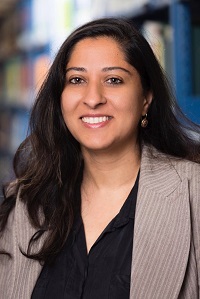
Attiya Waris is Professor of Fiscal Law and Policy at the University of Nairobi and the UN Independent Expert on foreign debt, other international financial obligations and human rights.
Q. The international landscape is becoming increasingly fragmented, with rising geopolitical tensions, shrinking fiscal space, and growing pressure on multilateral cooperation. How do you see these trends affecting progress towards the Sustainable Development Goals? And what role should the European Union play in this changing global context?
Attiya Waris: Multilateralism is definitely becoming more fragmented, but it’s also growing in other spaces. Multilateralism is growing among the countries that remain committed to it, even as its traditional champions step away. This is paradoxical at a time when globalization continues to deepen our interdependence. The SDGs are not doing so well for a multiple set of reasons.
And the trickledown effect of COVID is that economies did not grow at the trajectory that they were intended to grow, which means that debts taken up, for example, before COVID could not really be paid off by the infrastructure investments that were intended.
The European Union can play a really important role in focusing on the international financial system and making sure that it’s a fairer and more just system for the world.
Q. As UN Independent Expert on foreign debt and human rights, you have consistently argued that debt is ultimately a governance and justice issue—not simply a financial one. What do you think European policymakers still misunderstand about the relationship between debt, human rights and development?
Attiya Waris: One of the main challenges is the loss of institutional knowledge when governments change: new leaders inherit debts without always understanding their purpose or the decisions behind them. Debt is often taken on to finance infrastructure expected to generate enough revenue to repay the principal and interest. When that investment fails to deliver, governments should examine the project and return to the creditor—not impose additional taxes on the population. Citizens are often more fiscally aware than their new leaders and expect governments to confront these problems and communicate clearly. Debt therefore becomes a justice issue centred on transparency, access to information and public engagement—especially as secrecy around agreements with lenders such as the IMF and World Bank has become unacceptable.
Yet new governments, particularly former opposition parties, face a delicate dilemma. They may discover previously hidden information about the country’s debts, but declaring that those debts cannot be repaid can damage the country’s credit rating and currency. Honduras illustrates how a well-intentioned government can arrive with strong public support only to find that the fiscal reality prevents it from delivering its promises, while openly disclosing that reality may itself harm the country. Credit-rating systems may be deeply flawed, but their power can leave governments unable either to speak freely or to act on the mandate for which citizens elected them.
Q. The Fourth International Conference on Financing for Development renewed discussions on reforming the international debt architecture, including proposals such as a UN Framework Convention on Sovereign Debt. How do you assess the outcomes of these negotiations? What role did the EU play, and where could it have shown greater leadership?
Attiya Waris: I would prefer a binding treaty or convention on debt, although a framework convention may be a necessary compromise. Many governments appear reluctant to enter debt negotiations while the outcome of the UN tax negotiations remains uncertain; a stronger tax treaty might have changed that political dynamic. Despite this lack of appetite, the European Union and other developed countries should take the Vatican’s Jubilee1 call seriously and support debt cancellation as a critical stepping stone for many countries.
A deeper problem is the deliberate separation of negotiations on debt, tax, the SDGs and human rights, even though these issues are fundamentally interconnected. Governments often adopt inconsistent positions across these forums, risking legal conflicts that can eventually water down hard-won protections. A fairer debt system must therefore include the fair redistribution of taxes generated through countries’ markets and mineral resources. The post-war treatment of Germany showed what becomes possible when stronger countries choose not to take advantage of weaker ones: that principle should also guide today’s approach to poorer countries.
The separation between human rights and debt policy may happen by accident or by design, but it creates a fundamental incoherence. The International Covenant on Economic, Social and Cultural Rights requires governments to engage in international assistance and cooperation because realising rights—including food, health and education—requires financial resources. Yet discussions on human rights rarely include finance or legal officials, while debt negotiations remain detached from development, poverty and human rights.
Q. Throughout the negotiations, the EU argued that existing debt mechanisms should be strengthened rather than creating new international frameworks. From your perspective, are the current mechanisms fit for purpose? Where do you see their main shortcomings?
Attiya Waris: When countries say the debt system is working, it may be working for them—but the question is whether it works for all 200 countries. The creation of the Borrowers’ Platform2 itself shows that the existing system is inadequate. It is also so fragmented and technical that even specialists find it confusing. In a democracy, where political leadership changes regularly and anyone can become president, the system must be understandable and coherent for everyone. Building leaders’ capacity is insufficient if the system itself does not work; we need simpler rules, greater coherence and an international fiscal authority capable of bringing the different elements of fiscal governance together.
Secrecy and the absence of accountability are equally serious shortcomings. When borrowed money is lost through corruption, populations are still expected to repay it through their taxes, while the stolen funds—and those responsible for transferring or receiving them—often escape scrutiny. Responsibility lies not only with political leaders but also with the banks that accept illicit transactions despite their obligation to know their customers. Fair debt governance therefore requires political and corporate accountability, grounded in clear ethical principles and transparent rules.
Q. The Sevilla outcome includes several commitments on debt governance, including the creation of a Borrowers’ Platform. Looking ahead, which commitments have the greatest potential? And where should the EU focus its political and financial support to turn them into meaningful change?
Attiya Waris: The Borrowers’ Platform is critical because it creates the political space countries need to discuss their shared challenges. Africa’s experience with tax audits showed that governments could not meaningfully examine whether multinational companies were paying tax until a memorandum of understanding brought them together. Establishing the Platform is therefore a major political achievement—but it will only work if countries join quickly and begin those conversations.
The EU would benefit from supporting this process. Countries across the world, including smaller EU economies carrying substantial debts, could learn from others at a similar economic level. Governments should therefore join the Platform, while the EU provides political and financial support to its secretariat so it can become operational and effective.
Q. The EU is currently negotiating its next seven-year budget, including its external financing instruments. At the same time, there is increasing reliance on blended finance, guarantees and policy-based lending. What risks do these financing models create for developing countries?
Attiya Waris: Blended finance brings together two very different objectives: companies seek profit, while development finance is intended to reduce poverty and support development. The danger is that developing countries are asked to carry the risks created by the private sector’s profit motive. If the EU chooses to promote blended finance, it should bear that risk rather than transfer it to countries that were never asked to use this model during Europe’s own development. Fairness and fiscal legitimacy must remain at the centre of the approach.
Business always involves risk: if investors lack the appetite or knowledge to operate in a country, they should not expect that country to absorb their risk. False risk premiums and credit ratings place additional pressure on developing countries simply because investors do not understand them. These countries are not lesser partners—Africa holds many of the minerals Europe needs and its resources must be treated with equality and respect. Ultimately, governments take on debt to develop their countries, not to generate profits for investors.
Q. The European Union often presents itself as a global leader on climate action and a champion of climate justice. How compatible is this global ambition with the reality of debt burdens facing many developing countries?
Attiya Waris: Green technologies do not automatically deliver climate justice. Green hydrogen, for example, uses water to produce energy even though many African households still lack drinking water. Countries across Africa, Asia and Latin America have long invested in hydropower, wind and solar energy, yet mechanisms such as the EU’s Carbon Border Adjustment Mechanism allow Europe to determine whether their production is sufficiently “green.” That is less a form of climate justice than a method of control—especially when Europe simultaneously presents contested technologies such as nuclear power as clean energy.
Climate finance raises the same justice concerns. Instead of grants, countries facing the consequences of climate change are often offered more debt, while many of the countries historically responsible for pollution have not honoured their financial pledges. Even the funding available can be extremely difficult for low-income and climate-vulnerable countries to access. Promises must be honoured and application processes simplified: allocating money that is never released does not constitute support. The EU will only be considered a reliable partner if it follows through on its commitments and comes to the table with clean hands.