Alphonsine Mukamuhirwa: what sustained humanitarian support makes possible
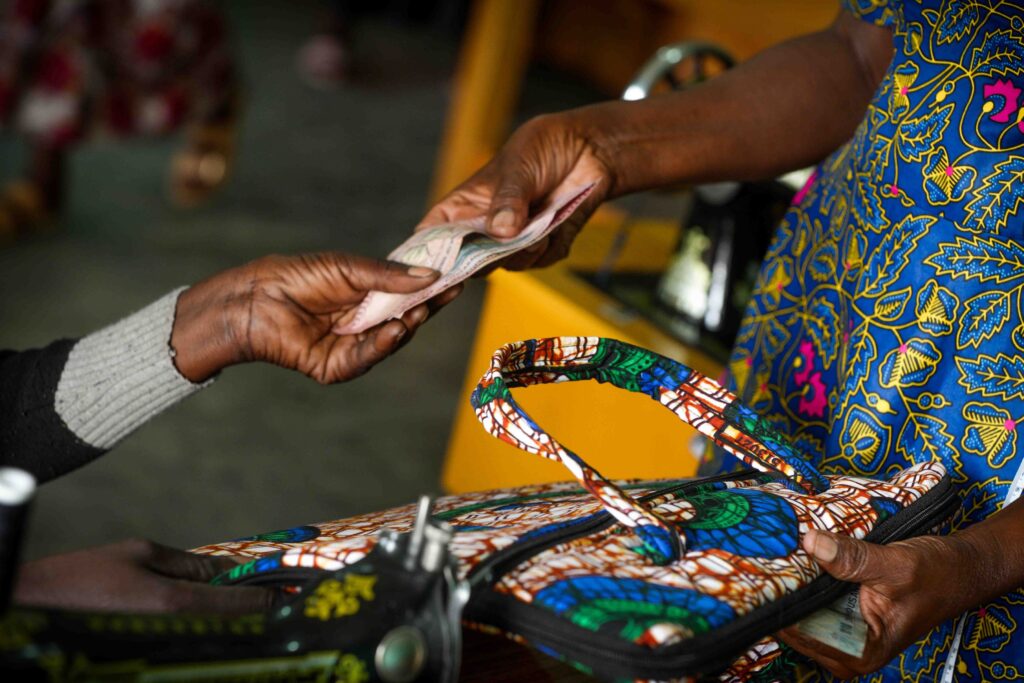
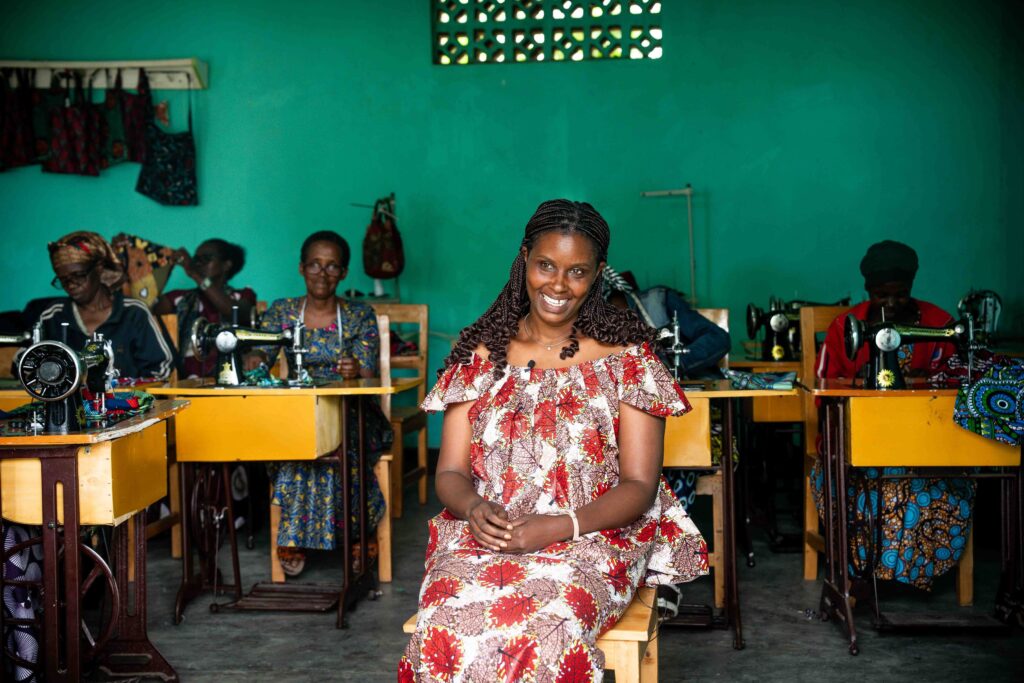
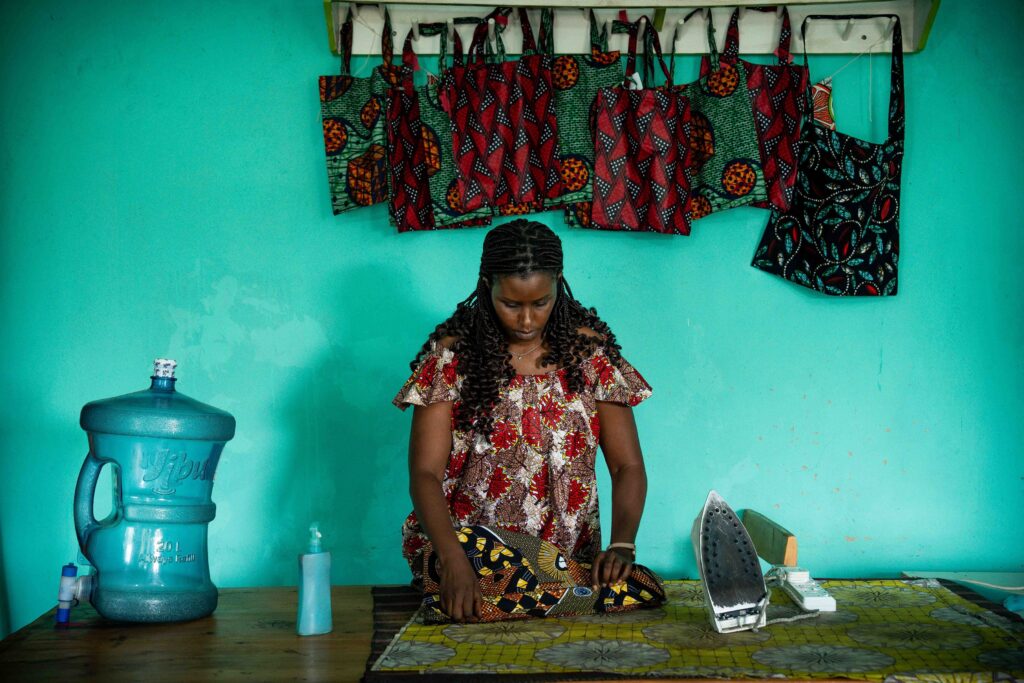
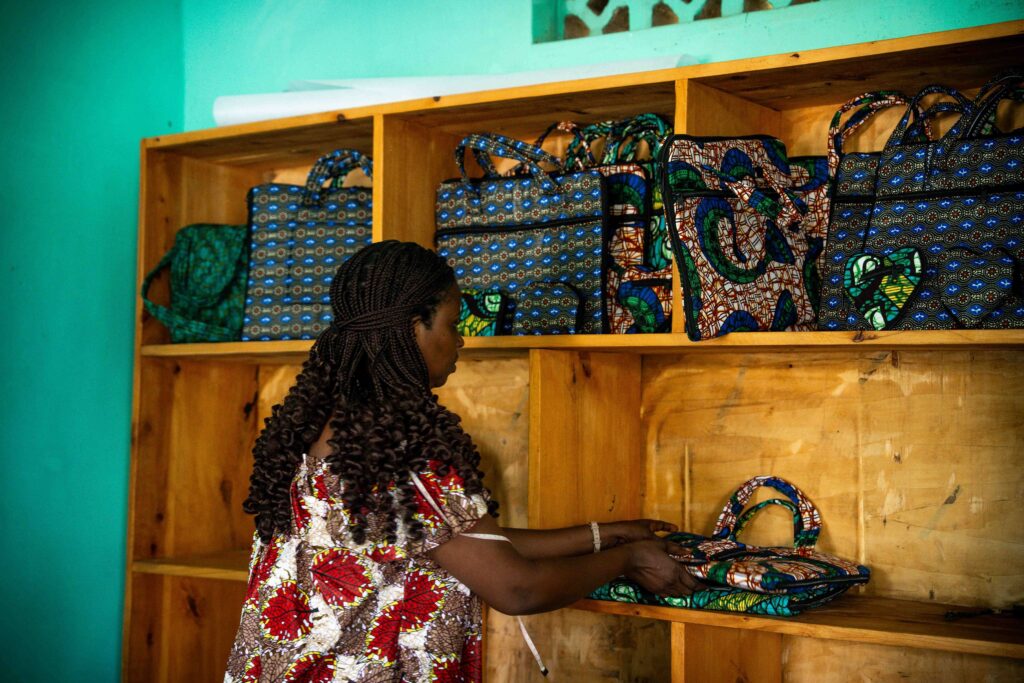
Alphonsine Mukamuhirwa is 43 years old, a mother of three, and lives with her mother in Gahondo Cell, Rwanda. Today, she works as a tailor, making clothes and accessories such as pants, bags, gowns, shirts and dresses for women.
Her story shows what sustained support can make possible for women who have experienced violence, poverty and exclusion: safety, income, solidarity, leadership and hope.
After surviving the Genocide against the Tutsi, Alphonsine and her family had to leave their home and rebuild their lives elsewhere. She explains that her mother had five children, but she was the only one who survived: “I lived with my mother, who had five children, but I was the only one who survived.”
Her education was interrupted early. “I became a mother at a very young age”, she says. As a young woman, she entered a relationship that became unsafe and violent. “Since then, I have never felt secure or safe as a woman in my own home.” She describes living through abuse and fear: “During that time, I endured a life of being beaten and tortured by him.”
For Alphonsine, violence was reinforced by stigma. Leaving the relationship meant facing judgement from the community. “I thought that if I left, people in my community would think I was just a street girl.” The stigma she faced affected how she saw herself: “I felt that I had no value.”
Her experience reflects how gender-based violence can isolate women and keep them silent. “Gender-based violence has negative effects on women.” Alphonsine explains that women often hide what they are going through because they fear being abandoned, blamed or rejected. “We hide our abuse to try to live better, but in reality, we are still living a very difficult life.”
The violence she experienced also limited her economic independence. “He kept me at home and did not allow me to work,” she says. Without income, she struggled to care for her children and meet her own needs. Eventually, she returned to her family home with two of her children and started working as a mason to support them.
A turning point came when Alphonsine joined other women in a training course on peace and unity. “There were 52 women in the training,” including survivors of the genocide, women whose relatives or husbands were in prison, abuse survivors, single mothers and women who had married young because they lacked support or a safe place to live.
From that group, 14 women stayed together and began to organise themselves. “Fourteen of us stayed together and began growing flowers. We became known for this work,” Alphonsine says. They used some flowers to decorate memorial sites and sold the rest to generate income.
This collective work became the foundation for something bigger. The women began learning tailoring, first with only one sewing machine. They reinvested the money they earned from selling flowers into their shared future. “Despite our poverty, we did not spend the money for ourselves;” Alphonsine explains. Instead, they bought more sewing machines and started producing items they could sell.
With training, equipment and accompaniment, the women strengthened their skills, learned how to save, provided small loans to one another, and gained knowledge on how to protect themselves and fight gender-based violence. For Alphonsine, this support was not only practical. It helped her move from isolation to collective strength. “The support from Action Aid helped me to meet women that I shared the same problems.”
The support of other women has been essential in helping her rebuild her life. “Working together in groups is far more effective than working alone.” Through the group, women share ideas, find markets and solve problems together. “By working together, we were able to find markets for our products.” This has helped them earn income, pay school fees, support their families and take care of themselves.
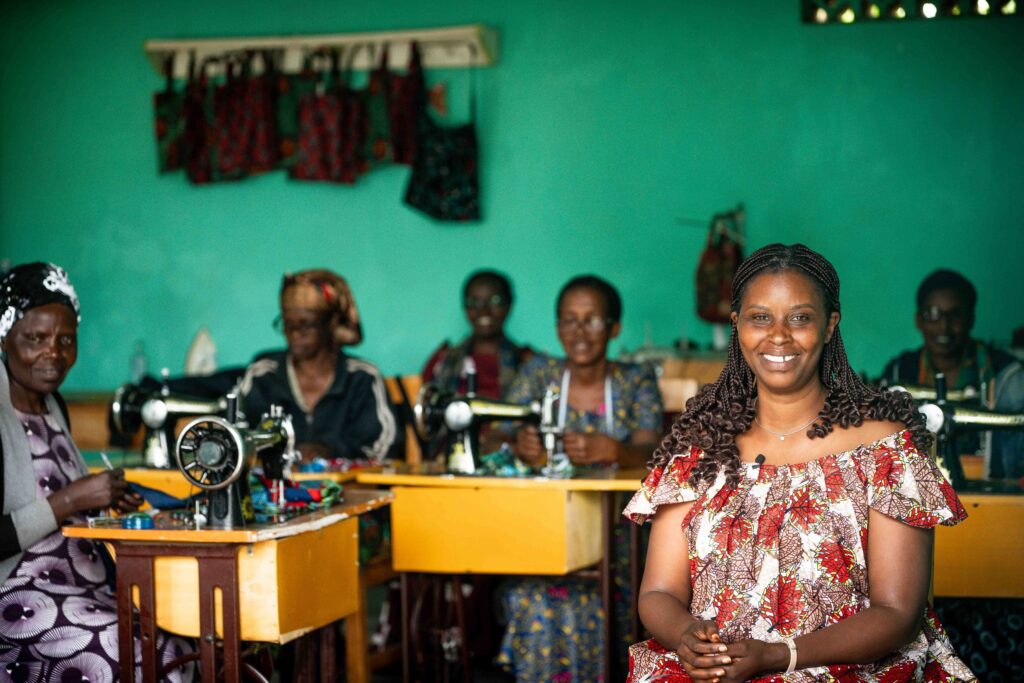
Alphonsine´s story also shows how humanitarian and development support can create the conditions for women’s leadership. Today, leadership gives Alphonsine joy, confidence and a sense of purpose. “It brings me joy because people have hope in me.” For her, being a leader means representing other women, raising their concerns and advocating for change. “Being seen as capable of leadership means being the voice of your colleagues and advocating for them.”
Her leadership is closely linked to fighting gender-based violence and supporting women and girls who cannot speak out for themselves. “To be a leader means speaking for others, reaching places they cannot, and highlighting violence against women in general.” She also speaks about girls who become pregnant, are abandoned, or face rejection from their families, and stresses the need for counselling, protection and support.
Alphonsine is clear that this kind of support must continue. “The support (from ActionAid) should continue for different reasons mainly to women”. She says there are still women facing poverty, violence and lack of awareness. Training gives people knowledge, confidence and a starting point to change their lives. “Through these courses, hope is instilled in people, and they are given a foundation from which to start working.”
She warns that if this support stopped, the consequences would be serious. “If ActionAid stopped supporting us, there could be many negative effects on our lives.” Even when women are already working and making progress, they still face barriers linked to poverty, climate change, unstable markets and limited opportunities. Without continued training and support, that progress could slow down or be reversed.
For Alphonsine, a good life is rooted in safety, justice and dignity. “For me a good life is a life without Violence ,without injustice,” she says. It also means having work that generates income, being able to care for her family and children, and living in a safe community.
Looking to the future, Alphonsine has hope. Her group now sells products online, and she dreams of reaching international markets. “I dream of selling products to foreign countries because I am a woman who has developed herself.” She sees herself and the women around her as proof that change is possible: “We are the ones who emerged from solitude and worry.”
Alphonsine’s story is a reminder of what sustained humanitarian support can achieve when it reaches women directly and invests in their safety, livelihoods and leadership. It does not only respond to immediate needs. It helps women rebuild their lives, support one another and become advocates for others.
As Alphonsine says, “Co-operation means working together to solve similar problems we face.”