Christine Mukeshimana: Knowledge is (collective) power
Christine Mukeshimana is 60 years old, a mother, and lives in Mwira Cell, Rwanda. She works as a soy farmer in a cooperative. Her story shows that access to knowledge and support can transform people into community leaders.
“Before connecting with ActionAid, I was living a very difficult life,” Christine states. She describes living in a hazardous area and being “unable to stand among others, unable to attend meetings.” Lacking a voice in her community impacted her sense of self-worth: she refers to her past self as “a woman of very little means… I was a housewife who did not participate in anything.” However, Christine’s image of herself as a person and a community member has transformed: “Today I stand where others stand. I am part of associations, I save, and I watch my family grow little by little.”
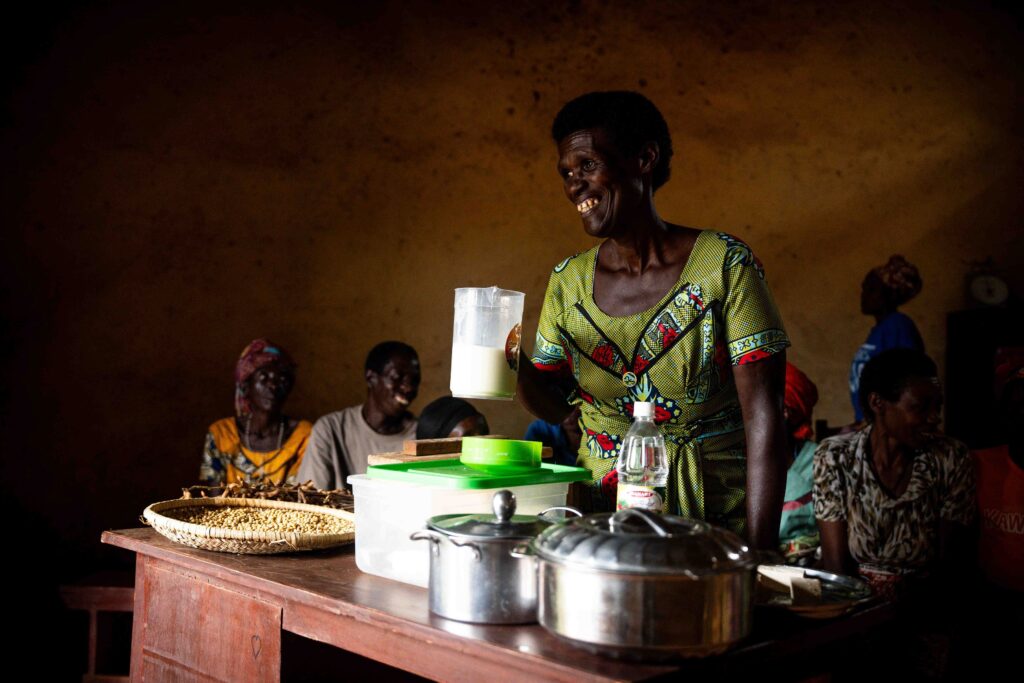
When Christine and several other women in her community joined the Kungahara Project, she gained capability and confidence. Through the Project, she and her peers “gained confidence to cultivate and harvest,” encouraging them to set aside their soy products for the market and earn income. The Project also helped her obtain resources, which she has utilized to improve her production. For instance, she now has a cow, which provides milk for her and her family as well as manure for the soy fields.
Resources that Christine has accessed with the help of the Kungahara Project have also been significant in improving her own quality of life. She now has a water tank, which means “no more tiresome routes” to and from the water well, allowing more time for other activities. She has also received funding which has allowed her to cover her child’s school fees and relocate from a hazardous area to the village, “living with dignity like everyone else.” With a second round of funding, Christine was able to purchase a small piece of land for cultivation. “I now own that land, and it has significantly increased my yield.”
Crucially, the Kungahara Project taught Christine and her peers to engage in sustainable agriculture. “Climate change caused great losses for farmers. The harsh sun would scorch our crops – we would cultivate and lose entire harvests. When harvests failed, hunger followed,” Christine recalls. “But they taught us how to cultivate while preventing soil erosion.” Trainings on sustainable farming practices have allowed Christine to conserve the land, mitigate pests and diseases, prevent soil erosion and more. “All of this has helped us cultivate, harvest good yields, set aside produce for the market, and meet our own needs.”
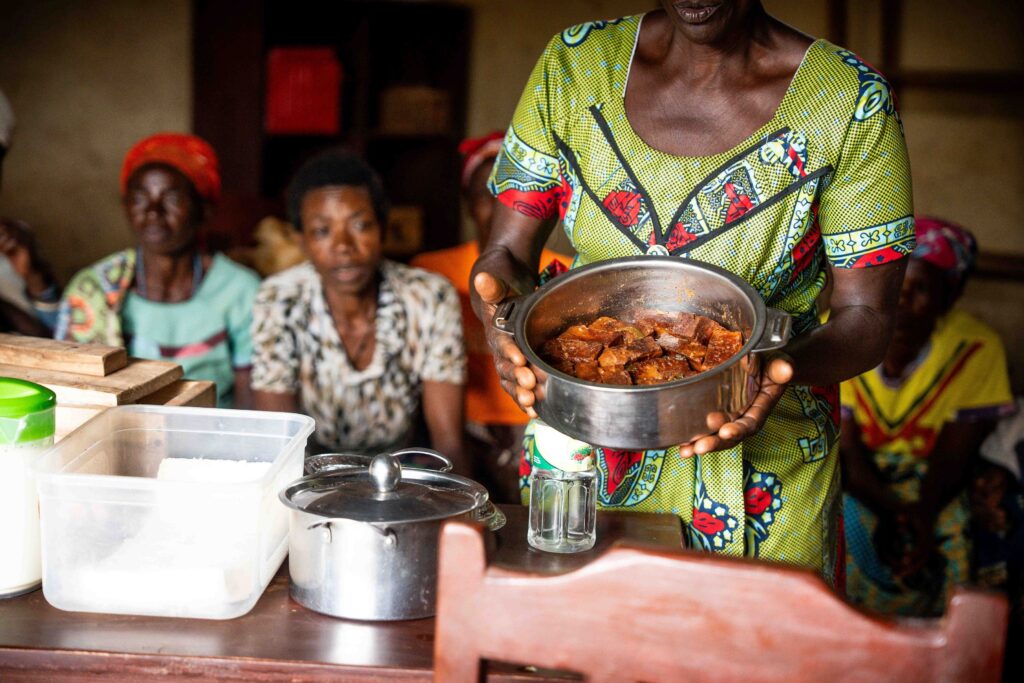
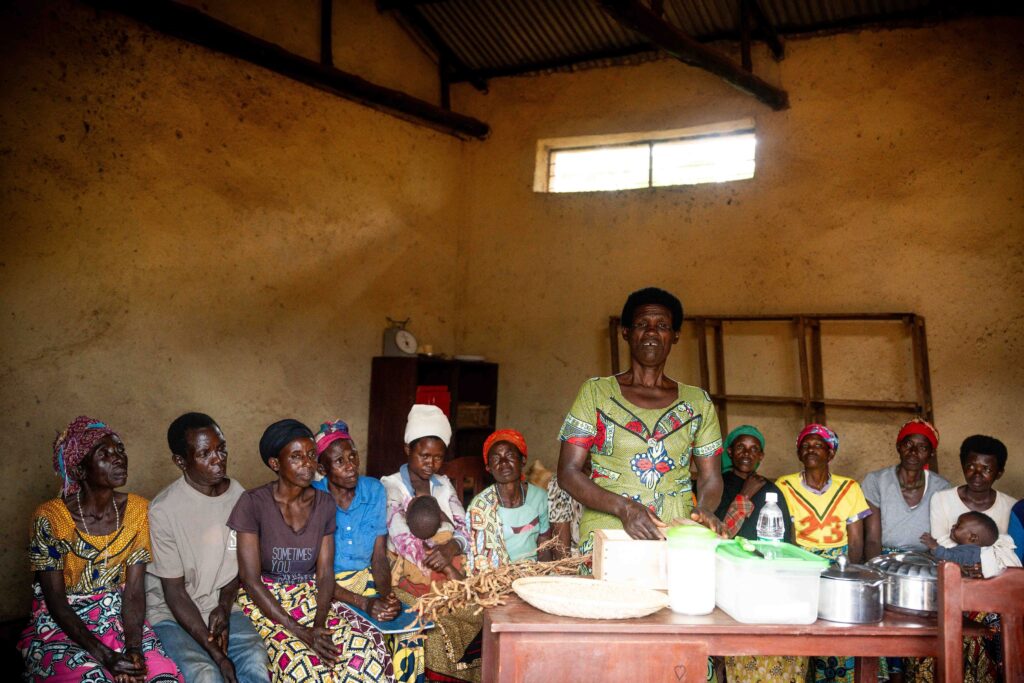
The knowledge that Christine gained has helped her become a role model and leader in her community. She teaches her neighbors about sustainable and modern agriculture by serving as an agriculture consultant and development coordinator in her village. Her newfound participation in her community has transformed her self-perception: “My voice carries weight now. Because I hold a leadership role, I am heard and taken seriously.”
Christine takes pride in knowing that many other women, too, have become more empowered as leaders and community members. “As women, we are now part of decision-making bodies. A woman today can have a seat at the table and dare to dream of a better future,” she affirms.
As Christine and her peers participating in the Kungahara Project have grown into their roles as advocates and engaged community leaders, they have worked to ensure that the benefits of their new resources and knowledge extend far beyond themselves. Christine asserts that women outside of the program benefit indirectly “because when we receive something within the community, we share it with them.” For example, “when I have a cow, no child around me needs to suffer from malnutrition. I can provide milk and help prevent it.”
Because of the participants’ work to ensure their wins are collective, Christine states that an end to external support would have a ripple effect, and “women would face significant consequences.” Sustained support also means a brighter future for Christine: “I had completely lost hope in the future. But now I have hope. I have a promising life ahead and I will continue to grow and progress.”
However, Christine’s belief in a better future is ultimately self-sustaining, as it lies in her own knowledge and determination. “My hope also rests in the knowledge I have been given. Because of what I have learned from ActionAid and the Kungahara Project, I now have a dignified livelihood. I will carry that knowledge into the future – to advance myself and lift both myself and my family out of poverty.”