Immaculee: The power of collective healing
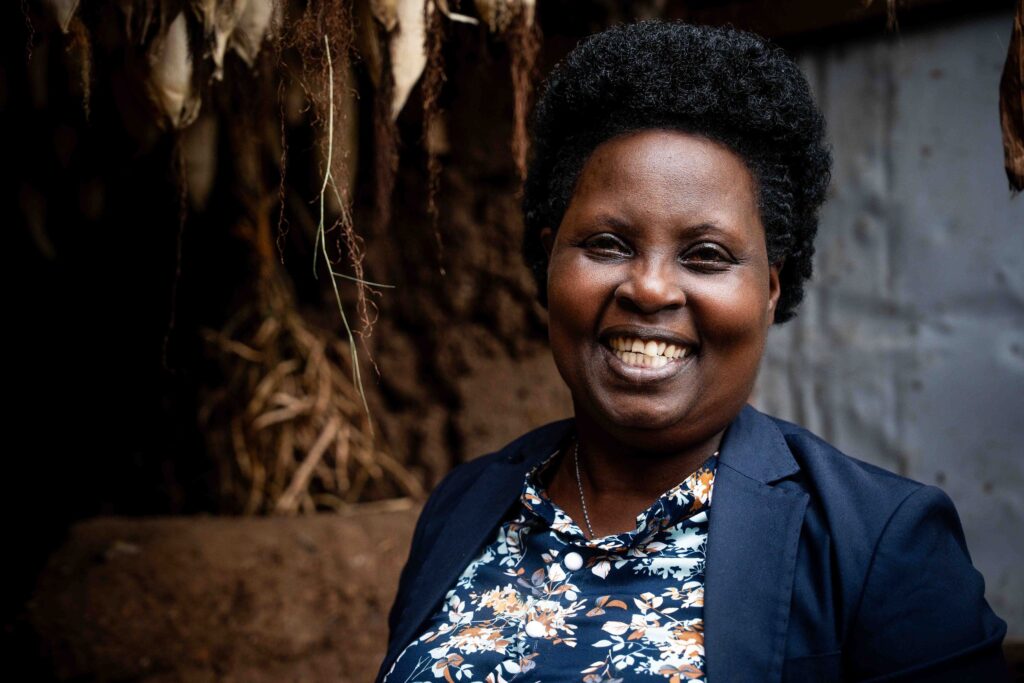
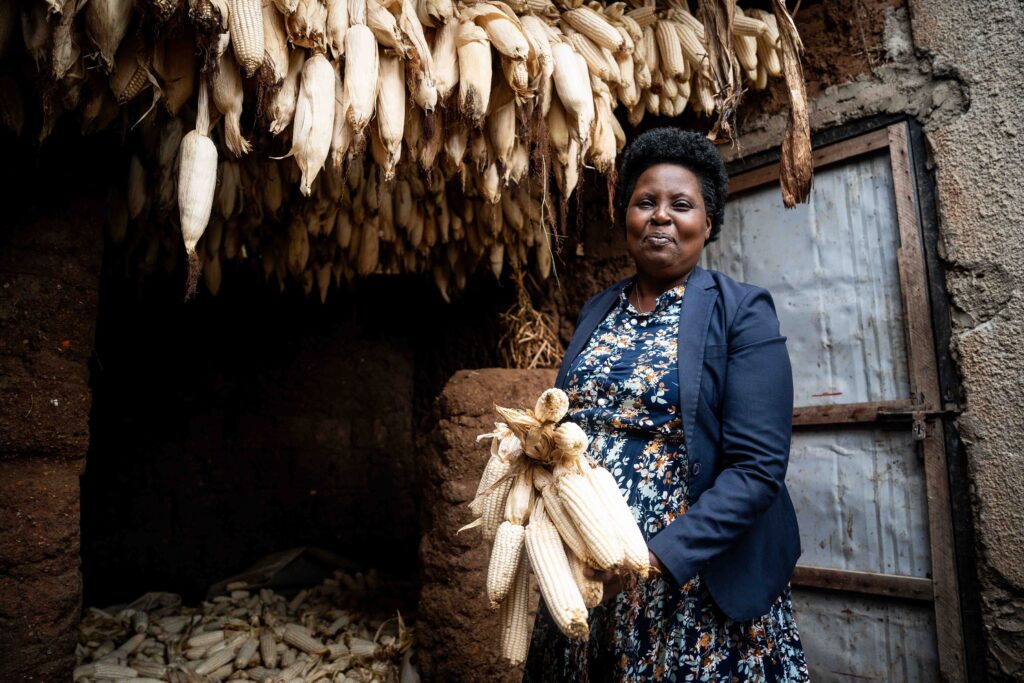
Immaculee Nyirampore is 52 years old and a mother of four. She works as a tailor and farmer, and she is involved in local leadership in Rwanda.
In 1995, a year after the genocide against the Tutsi had ended, Immaculee got married to a man who was in the military. “During that period, the aftermath of the genocide had left me vulnerable, displaced, and without a secure place to call home,” she says. She had been living with a woman in her church choir. After her first child was born, her husband left the military and the new family relocated to Rwamagana, where they started a banana plantation.
Although a new family and home seemed promising to Immaculee, things turned very quickly. Her husband gradually isolated her from the community. He would beat anyone who visited their home, including Immaculee’s friends, and he was a violent alcoholic. Immaculee underwent physical and emotional abuse as well as financial manipulation. He forced Immaculee to sell a cow and give him the proceeds, then used them to marry another woman. “I told myself that at least with another woman in the house, I might not be beaten as much,” she recalls. By this time, Immaculee had given birth to four children back-to-back and had no help from her husband or any close family to help care for her young children. “Overall, I had to face life by myself.”
Eventually, Immaculee reached a breaking point. Her husband had demanded that she sell her family’s land and give him the money, despite him accusing her of living off his means and spending his money. Her husband bought her a ticket home to sell the land, but she never went back. “I made a decision to never return back to him,” she declared, although the grief of leaving her four young children was immense. “Reflecting on the abuse I endured, I see that my children are now experiencing similar pain.”
After briefly staying with an aunt, she then moved in with her sister to find a job in Hanika. There, Immaculee found ActionAid.
Upon joining a program for survivors of gender-based violence, Immaculee found herself in a community of women who had experienced similar struggles. She shares how she and her peers “often found ourselves sitting together, crying and supporting each other.” As they shared stories and tears, the women realized that “we are not alone in the violence we have experienced.”
This community of women evolved into a cooperative called MPORE. Together, the women went through trainings that fostered independence and confidence. They learned how to save small amounts of money, which they maintained as a collective and used to buy food for members who couldn’t afford it. Immaculee and her peers also received guidance for starting and running small businesses. “ActionAid offered us counseling and training, helping us gain new hope for life,” she shares.
When the program offered her a cash grant, Immaculee considered going back to her children, but her husband, who had begun selling land that they owned together, was threatening her life. Remaining in Hanika, Immaculee participated in trainings on laws that protect and support women. “At the time of the abuse, I didn’t know that women have legal rights and protection,” she says. “I grew up believing that it was normal for women to be beaten and that property belonged only to men.” Through these trainings, Immaculee realized that her husband had no right to sell their shared property without her consent, and she decided to take action.
With the help of a lawyer provided by ActionAid, Immaculee legally filed for divorce and successfully regained her children. She was also provided a cow, which allowed her children to enjoy fresh milk. Through her new tailoring business, she was able to send her children to school and meet their essential needs.
When Immaculee realized she was capable of changing her own circumstances, she also became empowered to advocate for others. She identified women in her community who had the strength and capability of working but lacked the capital to start a business. Immaculee brought these concerns to ActionAid, who helped her organize these women into a collective of mushroom farmers. With funding from ActionAid, the women were able to start their farm, then build a large meeting space where women could gather and support each other.
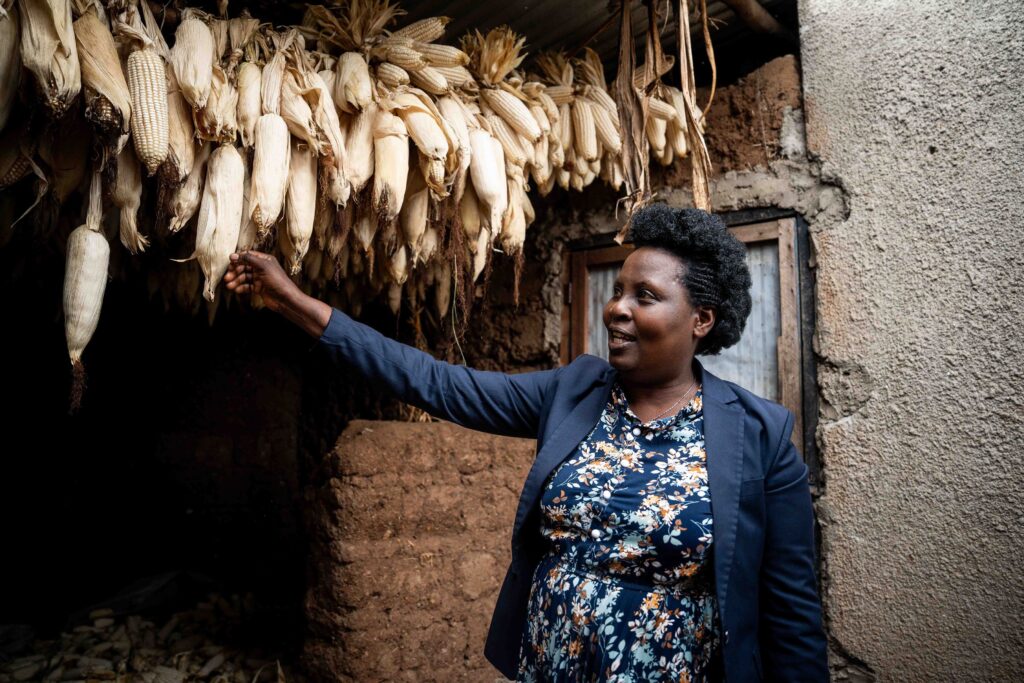
As a survivor of both genocide and gender-based violence, Immaculee seeks to help others who have overcome similar challenges. Through ActionAid, “we received training on trauma healing to help people work together without discrimination. Without identifying this is Hutu or this Tutsi,” she says. This group then joined together to start a tailoring business. “Now we have a strong tailoring workshop that is functioning well.” Additionally, Immaculee represents a women’s group in her community and serves as secretary in a community of genocide survivors. “Leading others is a responsibility I value,” Immaculee affirms, emphasizing the integrity and self-confidence required when one is trusted by others.
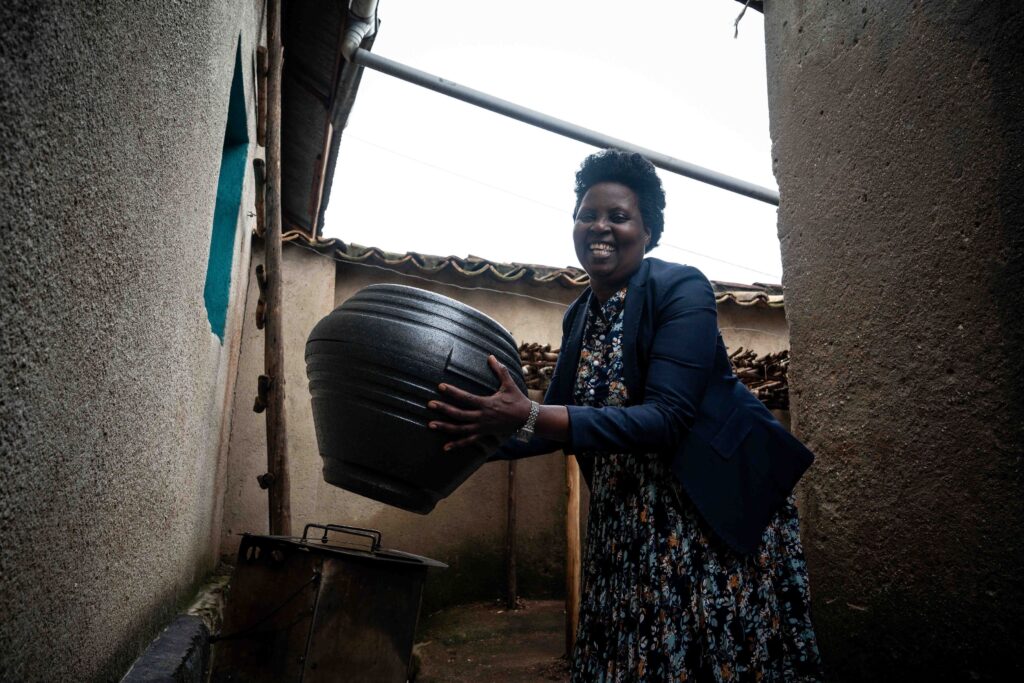
In order to ensure that more women can access the same support that was so significant for Immaculee, she emphasizes a need for continued support. “Gender-based violence still exists, and the changes in my life came through ActionAid. That’s why I believe the support should continue, so that more lives can be transformed.” Especially in the midst of climate change, Immaculee shared how ActionAid provided irrigation equipment to help farmers deal with crops during dry periods and respond to unpredictable weather conditions, making continued support an urgent need.
But most importantly, although ActionAid’s support helped Immaculee, the strength that she discovered was hers only; the same strength that she believes is inside every woman. “Women in Rwanda are strong and can take part in decision-making,” she affirms. “To women everywhere, I want them to know that women are capable.”