Ruth Umawahoro: Unearthing agency
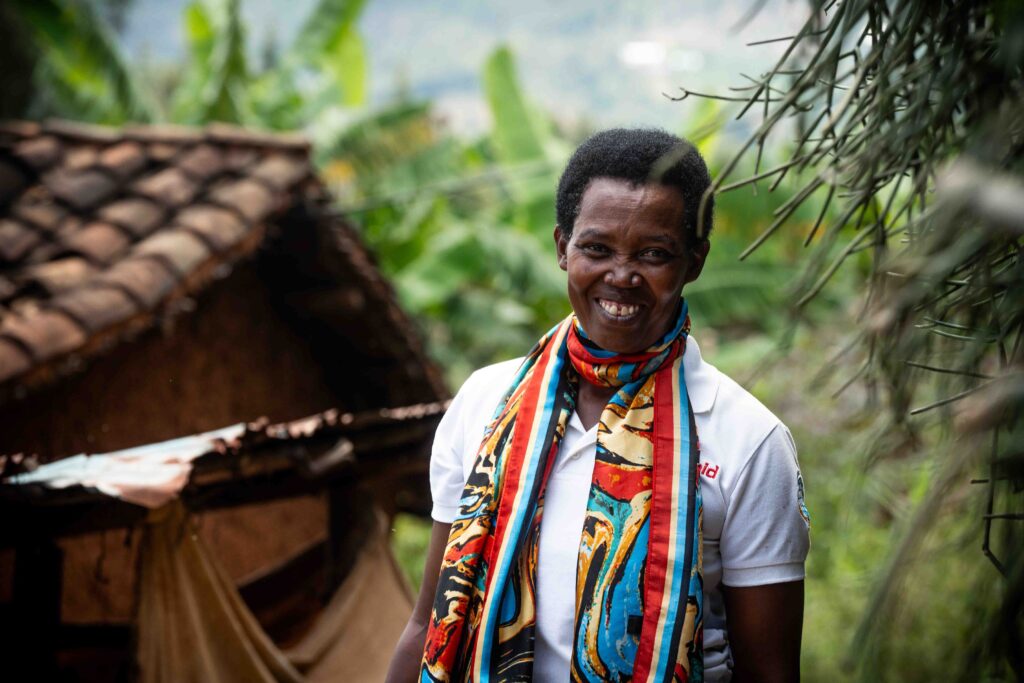
Ruth Umawahoro is 51 years old, a mother and wife, and lives with her family in Nyeranza Cell, Rwanda. Today, she works as a farmer, cultivating bananas.
Her story shows the transformative power of sustained support, which has helped her become empowered economically, socially, and personally.
While she currently sells her own produce for profit, previously, Ruth’s labor was limited to the home and was not compensated. She describes feeling constrained by her domestic life, both physically and mentally: “I was a housewife, confined to the home, raising children, and handling household responsibilities, not permitted to go outside or be aware of what was happening around me. My life revolved around the home.”
Ruth’s experience highlights how gender divisions can often keep women dependent on others rather than gaining capabilities for themselves. As someone who was barred from participating in life outside of the home, Ruth was unequipped to have agency in her community and advocate for herself.
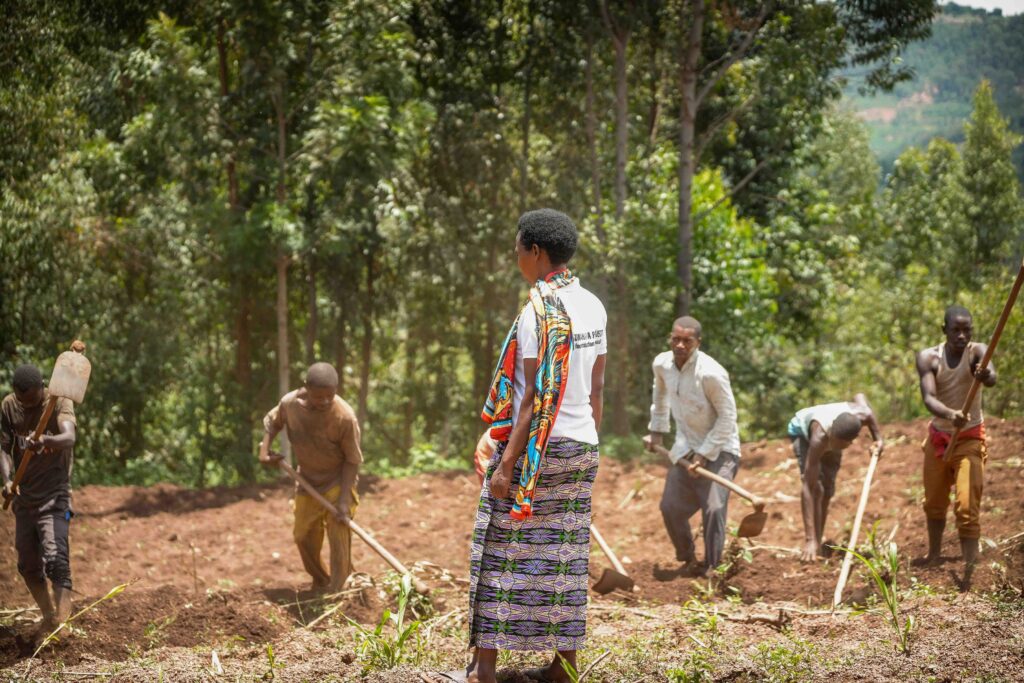
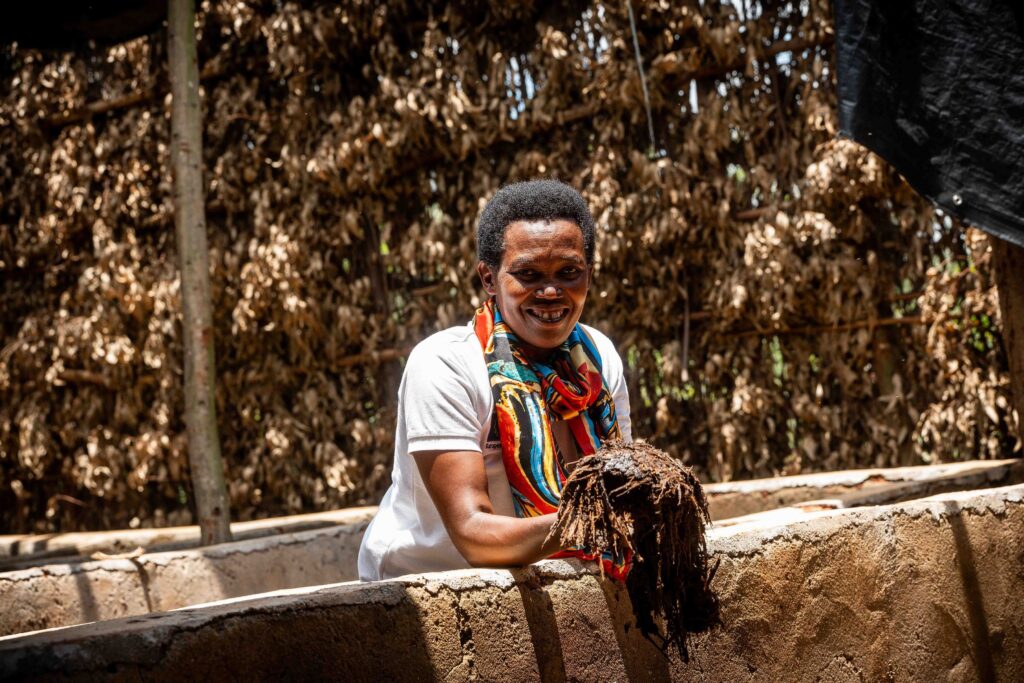
Things began to change when Ruth joined a group of other women for trainings in agriculture and leadership. These trainings taught her agroecology, a set of farming practices based around sustainable, small-scale agriculture. “With the trainings we received,” Ruth remarks, “we perfected these practices and now achieve abundant harvest, thanks to our understanding of modern agricultural methods.”
In particular, the trainings that Ruth and other women participated in fostered climate resilience. Before, Ruth recalls how “because of the erosion from mountains, climate change washed away crops that we cultivated, leading to a shortage of crops.” When Ruth and her peers participated in trainings, they learned how to prevent soil erosion through strategies such as planting cover crops. Additionally, they began to collaborate with community associations to gain access to machinery. This technology “helps us to irrigate crops during periods of intense sunlight, protecting them from drying out,” making Ruth and the other farmers less vulnerable in the face of climate change.
The skills that Ruth gained have helped transform her self-image, giving her confidence through increased competence. While she previously lacked income and saw herself as confined to domestic life, she now asserts herself as “a farmer with long-term vision,” and declares that “I am not engaged in subsistence farming without returns – I eat and I earn.” Ruth sells her produce, generating market income, and employs over 20 people. Furthermore, development assistance from ActionAid has even helped Ruth “build a house in the village center that now provides a steady monthly income.”
Not only has Ruth felt empowered as a farmer and income earner, but she has also found her voice as a leader in her community. The ActionAid program organized Ruth and other women into a decision-making body, which nurtured participants’ self-confidence and sense of community engagement. “After the trainings provided by the ActionAid project,” Ruth says, “women in associations gained self-confidence to participate in leadership roles and showed that a woman can lead, that she can earn trust from others. For example, I serve as the president of the parents’ association at a school, the CNF in my cell, and the leader of the council that works to prevent abuse in the sector.”
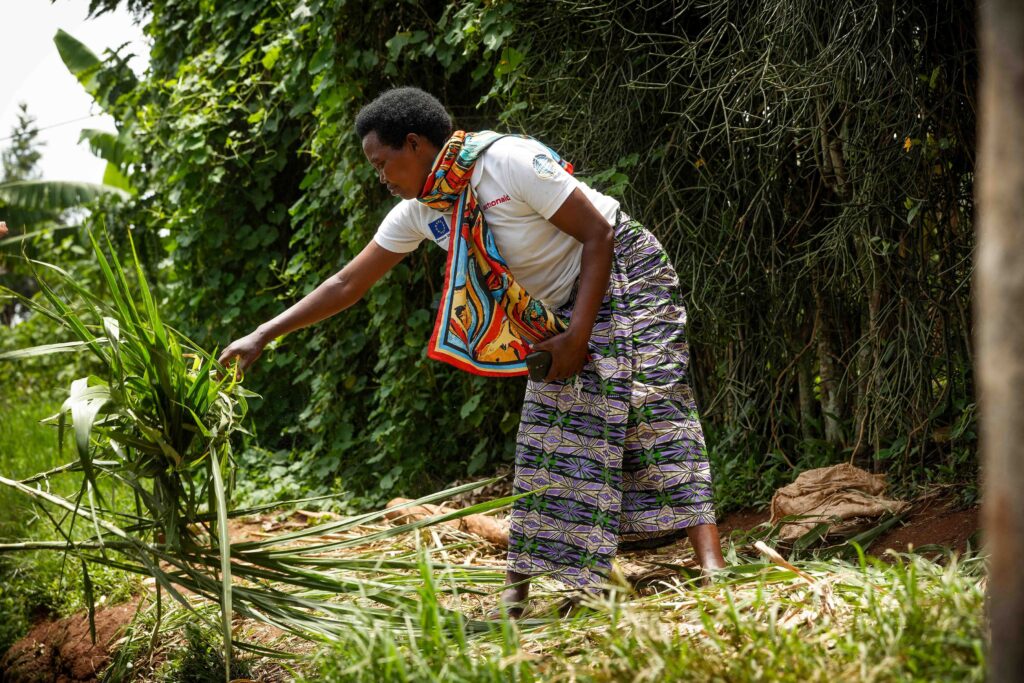
In the future, she strives to continue gaining capacity as a farmer, leader, and mother: “In agriculture, I hope to have a vehicle to transport my harvest to the market instead of hiring people for transporting my harvest. In leadership, I want to stand up for women at the district level, moving up from the cell level. I am also confident that my children will receive proper education, even reaching a master’s degree, and that I will have the ability to take care of them at the level they need.” To Ruth, these goals are not just far-off dreams, but achievable realities due to the support she has received in gaining skills and identifying her own agency.
As Ruth can now identify herself as an economically and socially empowered leader, she has awareness and concern for others who have been “left behind and still at the bottom” because they “have not received the trainings we received” and are “not yet aware that women have a voice and can be part of decision-making.” Therefore, Ruth believes that “it would be very beneficial if ActionAid’s support continues” so “the women left behind can gain confidence.” While she expresses gratitude for the trainings she and other women have received, especially in agriculture, she acknowledges that even those who have already participated “have not yet gained all the knowledge we still need… that is why I believe if ActionAid’s support stops, it could affect our community and each of us personally.”
Ruth’s hopes for ActionAid’s support to continue are rooted in her desire for a more interconnected and empowered community. She emphasizes the importance of collaboration in problem-solving and hopes to see “other women knowing their rights and the laws that protect them.” Although Ruth and other women have made significant gains in empowerment and leadership, the continued support of international assistance through organizations such as ActionAid can help further develop their capacity to both provide for themselves and bring up others within their communities. “When people unite, their strength increases.”