Violene: The transformative power of survivor support
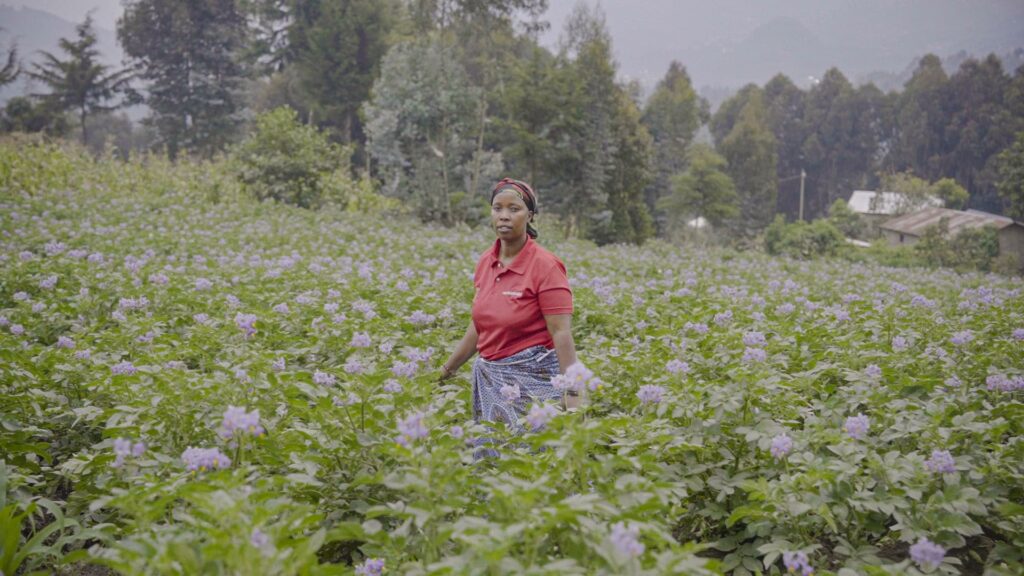
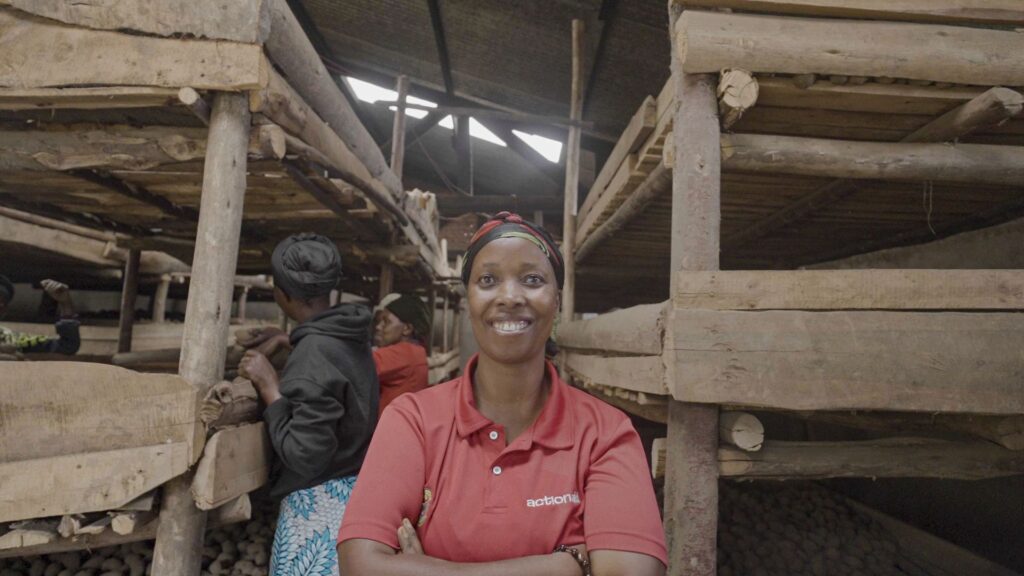
Violene Masimbi Mwumvira is a farmer living in Kibuguzo Cell, Rwanda with her child and mother. Her story shows how, when intentionally organized, survivors of gender-based violence can break stigmas, share support, and move forward together.
When Violene was 25, she entered into a marriage. However, after just over a year, she was abandoned by her husband, leaving her solely responsible for their nine-month-old infant. In her struggle to provide for herself and her infant, she was compelled to return to her family home, which forced her to give up her job as an accountant for a rice farming cooperative. However, relying primarily on her mother’s support proved unstable, too. Violene recalls living a life of hardship, subsisting on small-scale farming.
Her experiences left her feeling isolated and uncertain, which Violene characterizes as common experiences of women who have faced gender-based violence. “Gender-based violence affects women in many ways. Especially in Shingiro sector, gender-based violence exists in relation to property ownership,” she shares. Violene describes how women do not often speak out when being mistreated, as they fear isolation from their families if they report their husbands. She adds how women also fear being unable to support their families “if he is imprisoned as the family’s breadwinner. Then she hides the abuse.”
As a survivor of gender-based violence, Violene was not accustomed to speaking about her experiences, and she lacked confidence. However, a turning point came for Violene when she joined a group of other survivors of gender-based violence for mutual support and agriculture training. “ActionAid brought us together in groups, where we could talk with other women and support each other,” she shares. The women were trained in how to address gender-based violence, and to understand their rights under the law and how to advocate for themselves. “They provided training in various ways and brought hope into our hearts. Many of us had experienced loneliness, but by coming together with other women, we found shared experiences, formed a cooperative and began working together.”
In addition to providing direct support to participants, these trainings also empowered the women to uplift one another. “Within these groups, we also discuss our feelings, comforting those who are struggling and offer advice,” Violene says. She affirms that she and her peers are prepared to respond to women experiencing gender-based violence: “we listen to her and offer help, advice and practical support.”
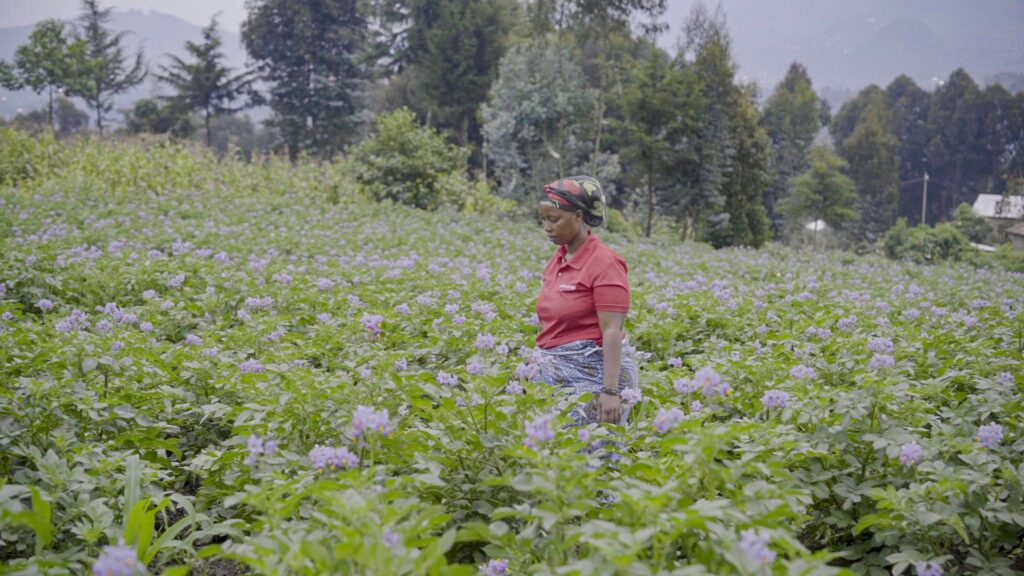
Not only has the mutual support shared by these women helped them overcome their trauma and regain confidence, but they have also collaborated in learning and practicing income-generating activities, with a particular focus on sustainable agriculture. Through ActionAid’s trainings, the women learned how to scale up their subsistence production and generate profit, becoming entrepreneurs.
Again, these trainings fostered interdependence among the women. “We share ideas on cooperative approaches and collective work, which has been immensely helpful,” reflects Violene. They formed savings groups, from which individual women could borrow money for specific projects. The women’s collaboration extended beyond their original cohort; they trained others who could not take part in the program firsthand.
Violene’s earnings have helped significantly improve her quality of life. She has used her profits to provide for her family, for example by paying her children’s school fees and accessing healthcare. She also invests much of her profits back into her own ventures. “I began my work applying the knowledge and skills I received from ActionAid, I cultivated crops, practiced garlic farming, and later purchased a cow. Now I have 3 cows purchased with the income from my farming business,” she shares. She has also bought a laptop, which she uses to source funding, investors and loans for her and others’ projects.
Her skills and success have given Violene immense confidence, and she now sees herself as a capable entrepreneur. Many of her endeavors look to multiply her own wins across her community. After taking part in a sector-level competition, Violene was selected as a local entrepreneur responsible for nursery development in her community. She has also trained over 450 local farmers in agricultural investment.
Outside of the agricultural and entrepreneurial spheres, Violene has become a multifaceted leader and advocate. She was elected as the leader of her 150-member cooperative. “They chose me because they saw my capacity to be the voice of other women in the cooperative,” Violene affirms. She also works as a family advisor, “helping households build healthy relationships and stronger, more stable families.” Violene even traveled to Kilimanjaro for a conference. “Here in Rwanda, the government has supported both women and men to have equal property rights, but we learned that in some other countries such rights are lacking. Together with women from these countries, we raised our voices in Kilimanjaro, calling for women’s rights to land ownership. Through experiences like this, ActionAid has greatly empowered me.”
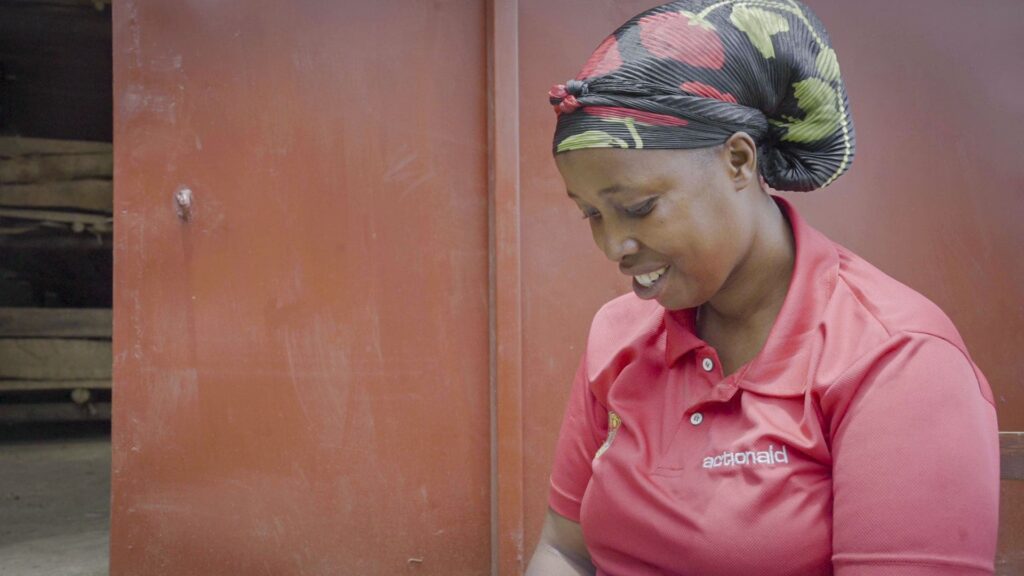
In reflecting on her experiences, Violene shares, “I genuinely enjoy leading. It empowers me to make an impact. I truly enjoy community advocacy, particularly supporting women.” She emphasizes the importance of women holding in leadership positions so they can speak out about issues that disproportionately impact women, such as violence and climate change. She refers to a Kinyarwanda saying, “ukurusha umugore aba akurusha urugo, meaning a man with a virtuous wife builds a virtuous, stronger household. Educating and empowering a woman is, in essence, educating the nation.”
Violene’s belief in the significance of women’s empowerment makes her strongly feel that sustained support is essential. “Gender-based violence and poverty still affect many women in Shingiro,” she says. Continued trainings can help more women rise from gender-based violence and become independent. Additionally, direct aid “has helped women’s burdens through resources like stoves and water tanks,” making daily chores easier and allowing women to spend more time on other activities. However, “these tools are still limited… ongoing training is essential to expand our skills, educate, and promote gender equality in households.”
When asked what gives her confidence, Violene answers: “Rwanda’s politics, which values women and has enacted laws to protect their rights. I feel empowered knowing I can work in a peaceful country and I am determined to keep growing and improving myself.” Although there are legal protections in place for Rwandan women, gender-based violence and gender disparities cannot be solely addressed by states; rather, they require additional local interventions to address violence from the bottom up, within families and communities. Organizations like ActionAid can fill this gap. “Because gender balance is not clearly understood, when ActionAid trains us on such topics we understand it more easily and apply it in our households, becoming a leading example for others.”
Support has helped Violene develop into an entrepreneur, community leader, and global women’s rights advocate. Her story shows how essential sustained support is to bring more survivors out of isolation and shame, showing them their own power.