
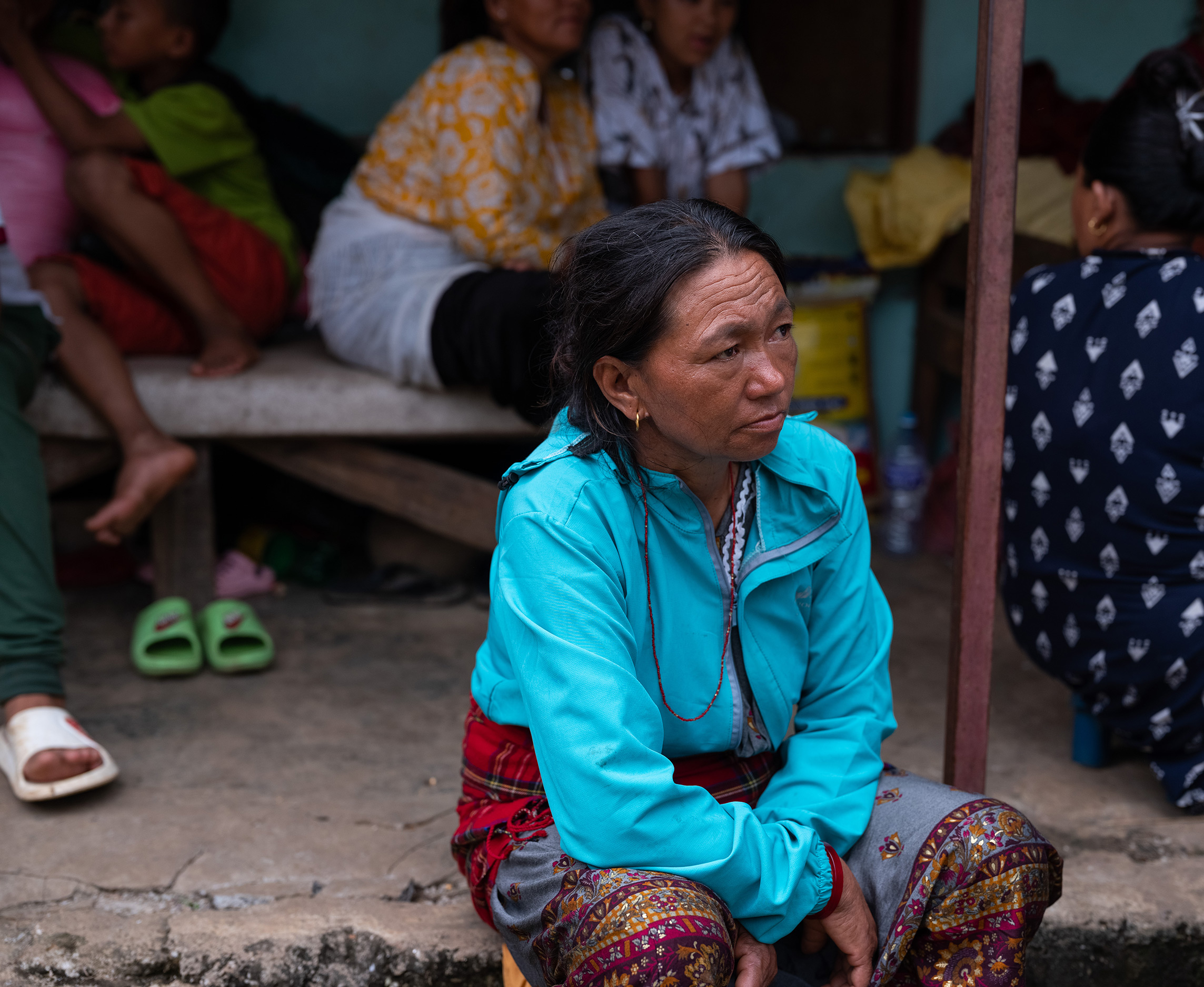
After surviving landslides in her former village, Dawasang and her family moved to Tupche, Nuwakot, to build a more secure future. Two and a half years later, devastating floods and landslides destroyed what they had worked so hard to achieve. Now, as emergency relief reaches affected communities in Nepal, she worries about her children’s education and what comes next.
All those years of hard work, thinking we would have something to eat and wear later, was for nothing. The floods swept everything away.
For Dawasang, a mother living in Tupche, Nuwakot district, Nepal, the floods and landslides of August 2026 did more than destroy property. They swept away years of effort, the security her family had worked towards and the future she had imagined for her children.
Her words capture a reality facing many families affected by Nepal’s devastating floods. For those who lose their homes, farmland, belongings and livelihoods, rebuilding can take months or years. For families already living with economic insecurity, the road to recovery can feel impossibly uncertain.
Dawasang shared her experience in a video interview in September 2026, speaking primarily in Nepali with the support of a translator.
Starting again, only to lose everything
Dawasang and her family had not always lived in Tupche. Around two and a half years earlier, they left their village of Salme after experiencing landslides there. They moved in search of greater safety and an opportunity to rebuild their lives.
Starting over required enormous effort.
The family bought a tractor, prepared farmland and worked to establish a livelihood that would allow them to provide for themselves. Sometimes, Dawasang recalls, they worked even when they had nothing to eat.
They were building towards something: enough security to put food on the table, clothes on their backs and opportunities within reach for their children.
Then the floods came.
We bought a tractor, worked hard, prepared the farmland, and put in a lot of effort. We did not know that a day like this would come. Sometimes we worked even when we had nothing to eat, somehow managing one thing or another. Everything is now gone.
The family’s experience illustrates the devastating impact of floods and landslides on people who have already been displaced by earlier disasters. Moving away from one hazard does not necessarily guarantee lasting security, particularly when communities face increasingly severe climate-related risks.
For Dawasang, the question is no longer simply how to rebuild what was lost. It is how to begin again when so much of what she worked for has disappeared.
Who will provide for my children?
The loss of the family’s livelihood has left Dawasang deeply worried about her children.
Her son is studying in Grade 11. Her daughter has completed Grade 12 and wants to continue into higher education. She is determined to pursue her studies, but her mother does not know how she can afford the costs.
She keeps saying, ‘I want to study no matter what.’ All she talks about is studying. And now I am worried about how I am going to educate her.
For Dawasang, this is one of the most painful consequences of the floods. She wants her children to have opportunities, but the resources she had hoped would support their future have been swept away.
“It hurts me that I cannot give my children money. It hurts that I cannot afford their expenses.”
Dawasang is also growing older and worries about her ability to earn an income through physical labour. She says she can sometimes work for other people to cover basic needs such as food and clothing, but this offers little certainty for the future.
“Who will earn for us now? Who will provide for us, for my son and daughter?”
Her concerns reflect the wider consequences of a disaster that damages not only homes and infrastructure, but also the livelihoods, education and financial security on which families depend.
For women who carry much of the responsibility for keeping households going, losing these foundations can mean facing difficult choices about their own needs and their children’s futures.
Emergency relief brings some comfort. Recovery will take longer.
As part of ActionAid Nepal’s emergency response, Dawasang received essential relief items, including cooking materials, bedding, blankets, clothes, soap, toothbrushes and toothpaste.
After losing almost everything, these practical supplies made an immediate difference.
When I had nothing at all, getting all these things for free made me very happy. I felt happy. I was left with nothing. Now, even in my heart, I feel like I have something again
Emergency relief helps families meet urgent needs with dignity. Cooking materials make it possible to prepare food; bedding provides somewhere to sleep; and essential hygiene items help people maintain their health in difficult circumstances.
But Dawasang is acutely aware that these supplies cannot replace a lost livelihood or secure her children’s education.
“They are providing relief for now, but what will we do when that runs out?
It is a question that matters far beyond one household. As emergency distributions continue, affected communities also need support to rebuild their lives, restore access to essential services and prepare for future risks.
ActionAid Nepal is working to address longer-term recovery needs, including psychosocial support, temporary shelters and learning centres. These efforts are essential to helping families move beyond immediate survival towards greater security and stability.
Nepal’s floods are also a question of climate justice
The floods and landslides that struck central Nepal in August 2026 severely affected Rasuwa, Nuwakot and Dhading districts, damaging homes, infrastructure and essential services.
The Government of Nepal declared 15 municipalities across the affected districts disaster-affected areas for a period of three months.
For communities already facing displacement, economic hardship and environmental risks, the consequences of such disasters can be especially severe. Families may lose the assets they depend on to earn an income, children may struggle to continue their education, and the resources needed to recover may be far beyond their reach.
These challenges must also be understood in the context of climate justice.
Nepal contributes only around 0.01% of global greenhouse gas emissions, yet its communities face a disproportionate burden of climate-related impacts. Those who have contributed least to the climate crisis can face devastating losses, with the fewest resources available to recover.
Climate justice means recognising this imbalance and ensuring that affected communities receive the resources, support and long-term investment they need. It means looking beyond immediate disaster relief to address the conditions that make people vulnerable, strengthen community resilience and support recovery that lasts.
For women such as Dawasang, this is not an abstract debate about climate policy. It is about whether a family can recover its livelihood, whether a daughter can continue her education and whether the next generation can look towards the future with greater confidence.
If someone could secure their future, I would feel much more at ease.
Throughout her interview, Dawasang returns to the same concern: her children.
She speaks about growing older and the uncertainty of what might happen if another flood or landslide strikes. She worries about what would happen to her younger children if she could no longer provide for them.
I am already old. It is my younger children who need something. If someone could secure their future in some way, I would feel much more at ease.
Her hope is not simply to replace the possessions she has lost. She wants her children to have a chance to study, develop their potential and build lives of their own.
That hope deserves more than a temporary response.
Emergency relief can help families get through the immediate aftermath of a disaster. Sustained recovery support can help them rebuild livelihoods, access essential services and regain a measure of control over their futures. Investment in climate resilience can help communities prepare for risks that may otherwise deepen existing inequalities.
Dawasang’s story reminds us that recovery must be measured not only by what is rebuilt, but by the opportunities people are able to regain.
Stand with communities affected by Nepal’s floods
Across Nepal’s flood- and landslide-affected districts, families are facing the difficult task of rebuilding homes, livelihoods and their plans for the future.
ActionAid Nepal is supporting affected communities through emergency relief and work towards longer-term recovery. This includes addressing immediate needs while helping communities access the support required to recover with dignity.
Your support can help ActionAid continue its emergency response and work alongside communities affected by disasters.
Together, we can help ensure that emergency assistance reaches people who need it, that recovery does not end when immediate relief runs out, and that women and their communities have the support they need to rebuild their futures.
Interview with Dawasang, a flood and landslide survivor from Tupche, Nuwakot district, Nepal. September 2026. Interview conducted primarily in Nepali, with translation support.